
SPECIALIST CARE · 10 HARLEY STREET, LONDON
Spinal braces & orthoses
Carefully assessed spinal support, from design through to fitting and review.

Designed around your needs.
Spinal orthoses range from soft supports to rigid custom braces. We assess the required support, fit and everyday use, working with your treating team where appropriate.
Our work includes digitally designed and 3D-printed spinal bracing. We discuss the design, materials and practical requirements before arranging manufacture.
Spinal support needs we assess
These are some of the reasons people come to us. Your symptoms, movement and goals determine whether this type of orthosis is appropriate.
- Scoliosis and changes in posture
- Prescribed protection following fracture or surgery
- Postural weakness and neurological support needs
Spinal support built around everyday use
A spinal brace needs to support the prescribed area while allowing you to manage daily routines. We discuss the difficulties you are having, review any existing brace and consider your wider treatment plan.
Soft and semi-rigid supports
These combine fabric, straps and sometimes reinforcing stays. They offer a different level of support from a rigid custom brace and are selected according to the purpose of treatment.
Rigid custom braces
A more structured brace may be prescribed where greater control is needed. A lumbar-sacral orthosis (LSO) supports the lower spine. A thoraco-lumbo-sacral orthosis (TLSO) extends further up the trunk. Coverage and shape are selected for the area requiring support.
Conventional and digitally designed options
Our work includes moulded thermoplastic and digitally designed, 3D-printed spinal braces. Shell shape, padding, ventilation, straps and closures all contribute to the finished device. We discuss the available options and what each would mean for comfort, dressing and everyday use.
Careful fitting, followed by review
Fitting includes checking the brace in relevant positions, discussing sitting and clothing, and showing you how to put it on. We agree a wearing plan and arrange review so that comfort and function can be reassessed. Where needed, we work with your consultant or rehabilitation team.
A clear recommendation before you commit
After assessment, you receive an orthotic report and an itemised quotation. We explain the proposed device, fitting and any practical requirements, so you can decide whether to proceed.
Orthotic Consultants Clinical case review · October 2026
Spinal brace comparison
Conventional thermoplastic and 3D-printed spinal orthoses
Clinical context
The patient returned because his existing plastic spinal brace had not adequately relieved his back pain. During trials of a new 3D-printed brace, he reported less pain. Following positive trial feedback, the new brace was supplied. Ongoing review will assess comfort, function and everyday use.
Front view
Head-to-pelvis alignment
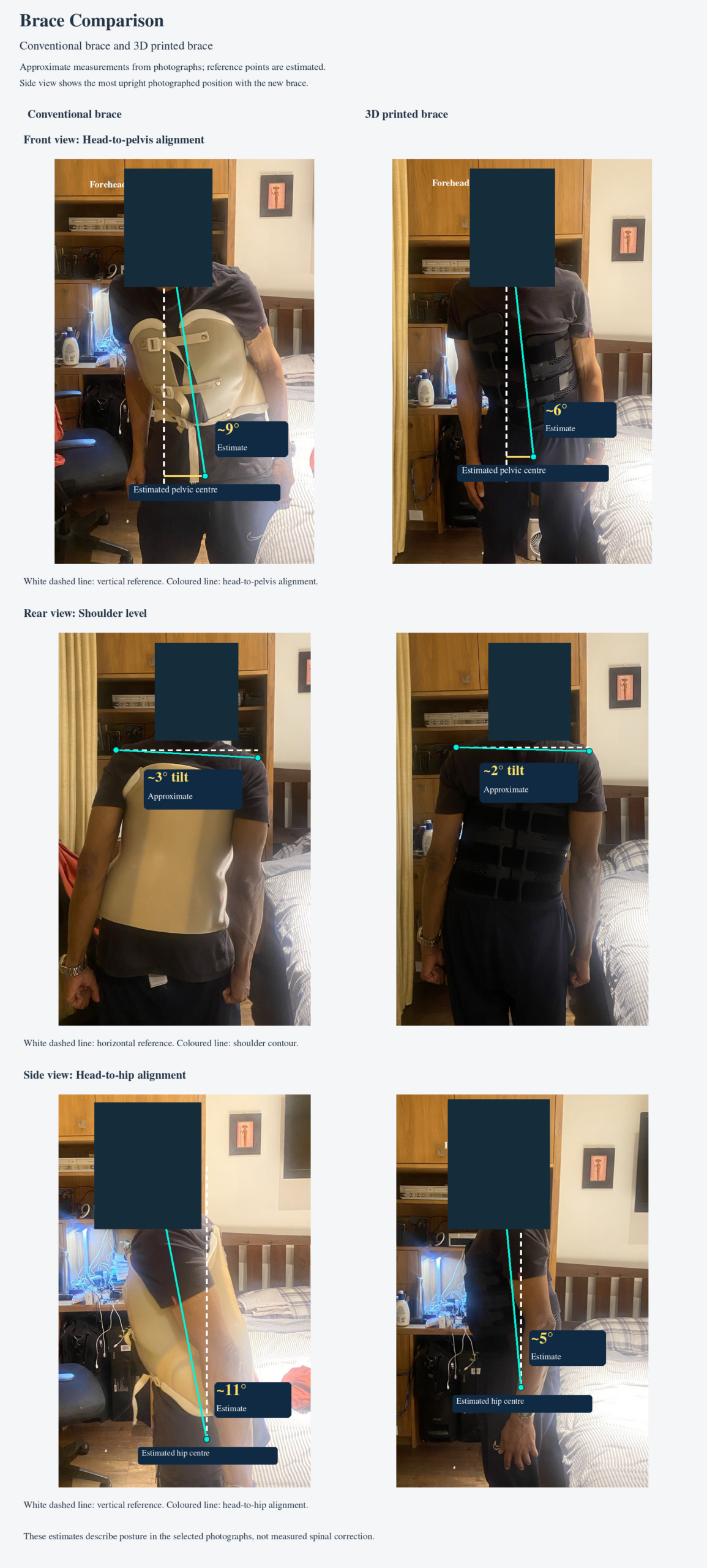
Approximately 9°Photographic estimate
Approximately 6°Photographic estimate
The dashed line is a vertical reference; the solid line marks estimated head-to-pelvis alignment.
Rear view
Shoulder level
Approximately 3° tiltPhotographic estimate
Approximately 2° tiltPhotographic estimate
The dashed line is a horizontal reference; the solid line follows the shoulder contour.
Side view
Head-to-hip alignment
Approximately 11°Photographic estimate
Approximately 5°Photographic estimate
The dashed line is a vertical reference; the solid line marks estimated head-to-hip alignment. The new-brace photograph shows the most upright position photographed.
Open printable brace comparison
Your assessment and fitting
Bring relevant clinical reports and your existing brace, if you have one. Fitting includes checking the support and comfort, explaining how to put the brace on, and planning adjustment and review.
You do not need to choose a device before your appointment. We assess your needs, explain the options and recommend a prescription. If you already have an orthosis that is not working for you, bring it so we can review it together.
Clear fees. Time to decide.
Your London assessment costs £199 and includes an orthotic report and itemised quotation. The device is quoted separately. Fitting costs £99 and a review appointment costs £99.
If casting is needed, it is carried out at the assessment appointment for an additional £99. We explain this charge before proceeding. Manufacture or ordering starts once you accept the quotation.
Not sure whether this is the right service for you? Ask our team before booking. Harley Street visits are by appointment only.